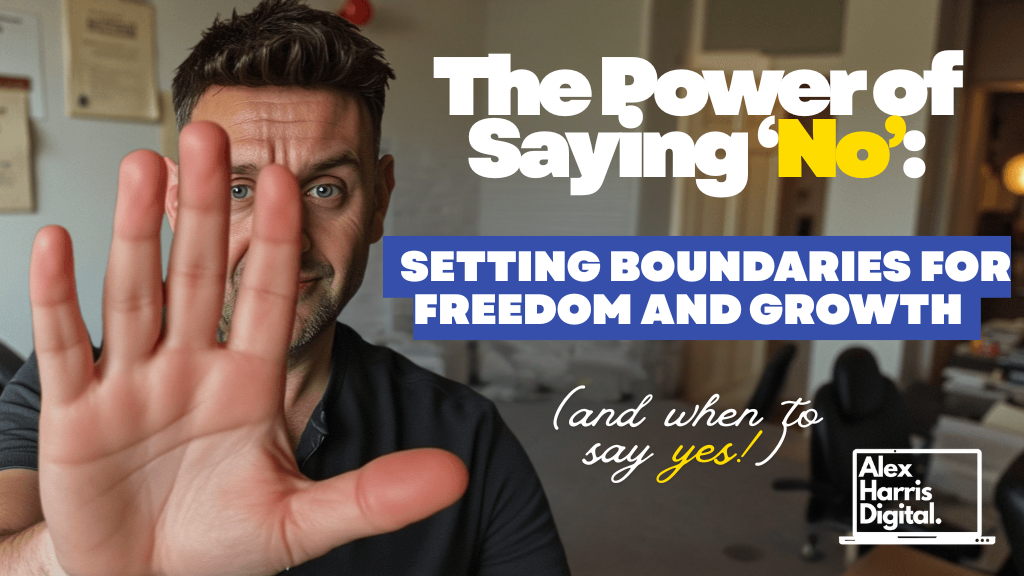
The Power of Saying ‘No’: Setting Boundaries for Freedom and Growth (and when to say YES!)
Ever found yourself nodding along to something you didn’t want, just to keep the peace? I have. More than once. But here’s the truth—every time I said ‘yes’ when my gut screamed ‘no’, I chipped away at my energy, my business, and honestly… my self-respect.
Here’s the honest bit—saying ‘no’ isn’t about being difficult or ungrateful. It’s about protecting your time, your creativity and your sanity. It’s about knowing your worth, even when it feels uncomfortable. It’s one of the most powerful tools you’ll ever use for growth—personally and professionally.
Why Saying ‘No’ Matters (Even When It’s Awkward)
I used to worry that turning down a client or a gig meant missing out. What if I never got another offer? What if people thought I was rude? But I learned the hard way—saying ‘yes’ to the wrong fit leads to stress, resentment and work that drains you. It’s not sustainable.
Sales psychology teaches us that boundaries signal confidence. When you’re clear about what you stand for, you naturally attract people who respect your time and expertise. As recent articles in Harvard Business Review suggest, setting clear communication norms and professional boundaries is key to establishing respect and building high-performing teams.
Maria Wendt’s approach backs this up—her single-outcome focus and disruptive hooks are all about clarity and intention, not pleasing everyone.
When Saying ‘Yes’ Was the Wrong Move
There have been times when I’ve taken on work that just didn’t sit right. Maybe the project felt a bit all over the place, or the expectations were way off compared to the budget. Sometimes I said yes when I should’ve trusted my gut and held out for a better fit. It never ended well. I’d end up drained, falling behind on the stuff that mattered and losing my spark for what I actually enjoy.
Eventually, I learnt to draw a line. If something doesn’t feel right, I’m upfront about it. Every single time I’ve stuck to my boundaries, something more suitable has shown up—work that fits, clients who get it and space to focus on what really matters.
When to Say ‘Yes’ (And Mean It)
It’s not all about shutting doors. The real magic happens when you say ‘yes’ for the right reasons. When the project lights you up. When the client respects your time and your process. When you can see your skills making a real difference and you actually feel excited to get started.
Saying ‘yes’ should feel like a genuine choice—not a reflex, not fear of missing out. Sales psychology calls this alignment—choosing what matches your values and your goals. This aligns with the 2025 trend towards customer-led growth, where the experience you provide to the right customers becomes your primary growth engine. Again, Maria Wendt’s frameworks echo this: double down on what works, what feels good, what helps you grow.
Here’s when I lean into a ‘yes’:
- The work supports my bigger vision
- The people involved are honest, respectful and open to collaboration
- There’s room for creativity and problem-solving, not just ticking boxes
- I can deliver real value without burning out
- It feels like a step forward, not just another task
When you say yes with intention, you build a business (and a life) that’s actually yours—not just a collection of random jobs.
The Emotional Freedom of Boundaries
There’s a weird kind of relief that comes with saying ‘no’. You stop feeling resentful. You get your evenings back. You start creating from a place of excitement, not obligation. Experts in Forbes have called saying ‘no’ a power move that is critical for preventing burnout and protecting your mental health. And it works.
Real talk: boundaries aren’t just about work. They spill over into every part of your life. When you respect your own limits, others do too. You gain authority, trust, and—surprisingly—more opportunities.
Growth Starts With the Right ‘Nos’
Every time I’ve turned down a gig that didn’t feel right, I’ve made space for something better. I’ve had more energy for the clients who value what I do. I’ve been able to focus on building my site, launching new services and actually enjoying the ride.
Again, Maria’s content audits and batch testing? They’re all about saying ‘no’ to what’s not working, so you can double down on what is. The same principle applies to clients and projects. As one business strategist noted, if you want better clients, you have to change what you say ‘no’ to.
How to Say ‘No’ (Without Burning Bridges)
- Be honest, not brutal. “This isn’t the right fit for me right now.“
- Offer an alternative if you can—”I can recommend someone who might be a better match.“
- Don’t apologise for your boundaries. You’re protecting your best work.
Final Thought
Saying ‘no’ is uncomfortable at first—but it’s a muscle that gets stronger with use. Every time you set a boundary, you’re building a business (and a life) that actually works for you.
So—what’s one thing you need to say ‘no’ to this week? Let’s make space for the right ‘yes’ together. 🚀
Ready to say ‘yes’ to smarter, stress-free marketing? Unlock access to my AI Tools With Alex suite—60+ AI-powered tools to help you work less, create more, and focus on what actually matters. Whenever you’re ready, check it out and see how much easier your business can feel. If you want to chat and need help with something else marketing-wise, please contact me HERE.
List of URLs Used: