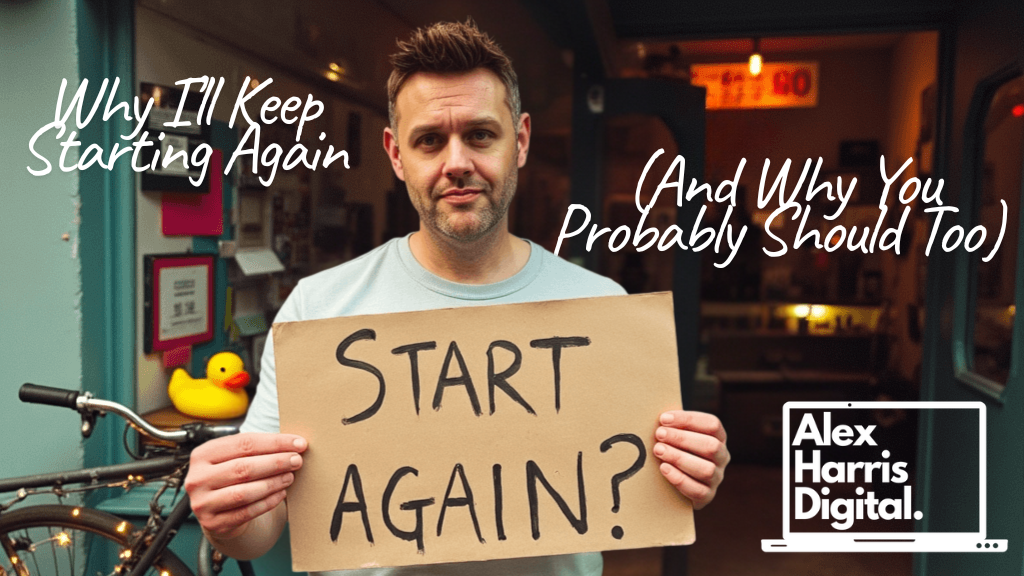
Why I’ll Keep Starting Again (And Why You Probably Should Too)
A few days ago, I published a post titled “Starting Again and Refusing to Be Put in a Box”. To be honest, hitting ‘publish’ made me nervous. The piece was raw, a bit rough around the edges and deeply personal. I had no idea how it would land with readers.
The response wasn’t a flood of comments or a viral wave of shares. It was quieter, but just as significant. My site traffic jumped. People clicked through, they read and they stayed. That experience reinforced a lesson I’ve learned time and again: when you are honest about the process, people pay attention. They connect with the journey, not just the polished destination.
Why Starting Again is the Engine of Growth
The modern narrative is obsessed with overnight success, but the reality is that it’s largely a myth. True, sustainable growth—in our careers, our creative pursuits and our personal lives—comes from the willingness to start over. It’s found in the courage to wipe the slate clean, even if you don’t know exactly what you’ll write on it next. A fresh start feels like a risk, but it’s the fertile ground where our best work begins.
If you’ve been doing the same thing for a while without re-evaluation, you might be playing it safe. Safety is comfortable but comfort rarely sparks progress. Every significant leap forward in my life has been preceded by a decision to try again, often at the risk of embarrassment or failure. It meant stepping into the unknown with little more than a hypothesis and a willingness to be wrong.
The Trap of the Perfect Plan and the Power of Iteration
Many of us wait for the perfect plan before we make a move. We tell ourselves we’ll start when we have more information, more resources, or more confidence. This is often a form of procrastination rooted in what Nobel laureate Daniel Kahneman calls the “planning fallacy.” We consistently underestimate the time, cost and challenges involved in a new venture, and we overestimate its benefits. By waiting for a flawless blueprint, we remain stuck in analysis paralysis.
The most meaningful projects in my life didn’t begin with a grand strategy. They began with a single, iterative step. An iterative process, working in small repeated cycles, allows you to learn and adapt as you go. Instead of building a massive, rigid plan, you build a small prototype, test it and gather feedback. This approach reduces risk and increases flexibility, allowing you to make continuous progress without needing all the answers upfront. It’s about embracing a growth mindset, where every action is a learning opportunity, not a final verdict on your success.
The Messy Middle: Where Real Connection Happens
Social media is a highlight reel of polished wins. But the part that truly resonates with others is the messy, uncertain middle—the part where you’re wrestling with a problem, navigating setbacks, and figuring things out in real-time. That’s what I shared in my last post, and that’s what people responded to.
Sharing this vulnerability creates what experts call psychological safety. It’s the belief that you won’t be punished or humiliated for speaking up with ideas, questions or mistakes. When you are open about your own struggles, you give others permission to be open about theirs. This fosters a profound sense of trust and connection, whether it’s with a team, an audience or just one other person. It’s in that shared space of imperfection that real relationships are built.
What Actually Works: Lessons from the Trenches
Reflecting on the last week, I’ve distilled a few core principles for anyone navigating their own “restart”:
- Nervousness is a Compass: That feeling of anxiety before you share something new is often a sign you’re on the right track. It means you’re pushing past your comfort zone and into territory that matters.
- Honesty Builds Bridges: People crave authenticity. In a world of curated perfection, your real voice is your greatest asset. Share what’s true for you, while always being mindful to protect your own well-being and that of others.
- Quiet Engagement is Still Engagement: Don’t mistake a lack of public comments for a lack of impact. Views, read-time, and private messages are powerful indicators that your work is resonating. Look beyond the vanity metrics.
- Consistency Compounding: One honest post is a good start. A consistent practice of showing up authentically is what builds momentum. As James Clear explains in Atomic Habits, small, regular actions compound over time to produce remarkable results.
- Take the First Smallest Step: You don’t need a five-year plan. You just need to identify the very next action. What is one small thing you can do today to move toward your new beginning? Do that, and then worry about the next step tomorrow.
Your Invitation to Begin Again
Starting again is rarely a dramatic, public announcement. More often, it’s a quiet, personal decision—a small experiment, a new morning routine, a difficult conversation or an honest piece of writing. These are the moments that shift our trajectory, even if they never make it onto a social media feed.
The last week has been a powerful reminder that this approach works. The traffic increase was nice, but the real reward was feeling more aligned and connected with my own work. If you’ve been holding back, waiting for the “right moment,” this is your nudge. You don’t need anyone’s permission or a grand reveal. You just need to take one honest step.
If you’re standing at a crossroads and want to talk it through, get a fresh perspective, or just find a little encouragement, I’m here.
Book a free 30-minute discovery call—no pitch, no pressure, just a real chat about where you want to go next. Book your call here.
Let’s see what happens when you decide to back yourself—even, and especially, when it’s a bit messy.